2025

Fiona Liu 刘贝妮
PhD Candidate · Ethnomusicology · Educator
Working across music, culture, gender, ritual, and academic education.
Working across music, culture, gender, ritual, and academic education.
Meet Fiona
Hi, I am Beini Liu, a PhD candidate at Universiti Utara Malaysia (UUM). I am a member of the International Council for Traditions of Music and Dance (ICTMD), the Chinese Traditional Music Society, and the China Art Anthropology Institute.
About
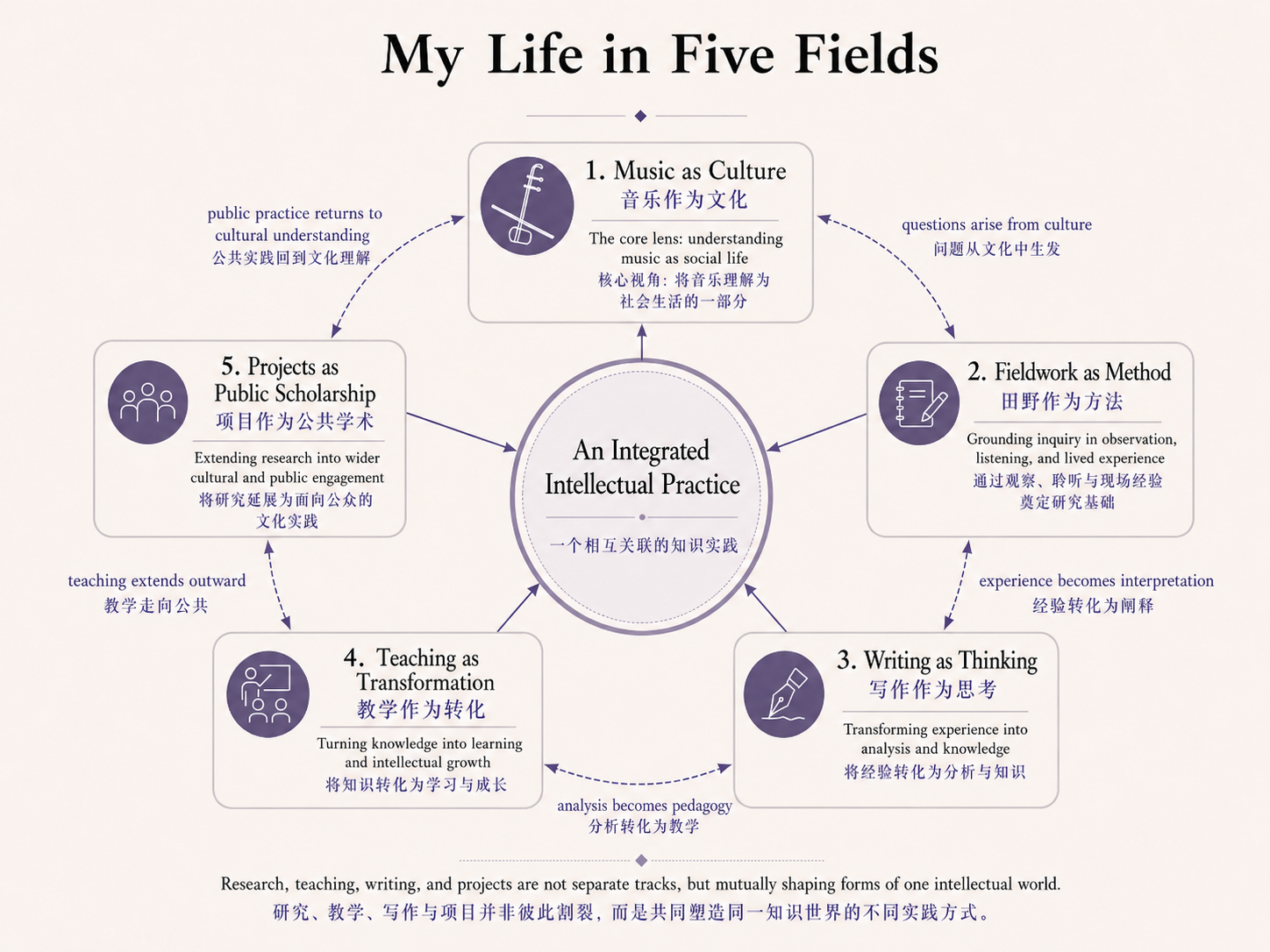
Each field is clickable and opens into a more detailed page. 每个领域均可点击,进入更完整的内容页面。
Research
Research Threads
My research path first developed from the study and training of Chinese traditional music, and later turned toward the cultural contexts, social relations, and field experience emphasized in ethnomusicology.
| Year | Research Thread | Paper Title | Focus | Status |
|---|---|---|---|---|
| 2026 | Intangible Cultural Heritage, Short Video, and Sonic Translation | 音乐非遗的短视频化与声音转译 | Examines how Xi'an drum music is re-mediated through short-video platforms, focusing on the transformation of sound, performance, heritage narration, and public reception in digital circulation. | In Progress |
| 2025 | AI, Musical Style, and Cultural Translation | Ethnic Music Style Migration Algorithm Based on Artificial Intelligence | Explores how AI-based style migration raises questions about ethnic musical style, technological mediation, and cultural representation. | Accepted |
| 2025 | Oral History, Chinese National Community, and Music Documentation | 音乐口述史中的“中华民族共同体”表达机制 | Developed from the National Arts Fund project on oral history and music documentation of the Chinese national community, this thread explores how musical practices, oral narratives, and ethnic community memory can be documented and interpreted through ethnomusicological research. | Accepted |
| 2021 | Peking Opera, Model Opera, and Vocal Music Structure | 京剧“样板戏”生腔音乐研究 | Examines the musical structure and stylistic features of shengqiang in Peking Opera “model operas,” with attention to vocal writing, theatrical convention, and the transformation of traditional operatic language in modern political and cultural contexts. | Master's Thesis |
| 2020 | Huqin, Opera, and Instrumental Transformation | 胡琴在板腔体戏曲中的演变 | Examines the historical and stylistic transformation of huqin within banqiang-style opera traditions. | Published |
| 2020 | Ritual Sound and Local Religious Practice | An Investigation Report on the Music of Lectures in Lingying Palace of Mount Tai in Shandong Province | Based on fieldwork on Taoist ritual music at Mount Tai, this thread examines the relation between local religious practice, ritual sound, and musical documentation. | Conference Paper |
| 2020 | Labor Song, Place, and Cultural Memory | 山东运河号子审美特征及文化内涵研究 | Considers Shandong Canal Chant as a musical expression of regional labor, aesthetic form, and cultural memory. | Published |
| 2020 | Traditional Music and Classroom Pedagogy | The Art of Lesson Preparation of Music Teaching in Junior Middle School: Based on the Perspective of Traditional Chinese Music | Reflects on how Chinese traditional music can inform lesson preparation and music pedagogy in secondary education. | Published |
| 2020 | Humanistic Spirit and Music Education | 论音乐表演中的人文精神 | Engages with the cultivation of humanistic values through music education and aesthetic experience. | Published |
Research Training 丨 研究训练
Research Training
2025
The 4th Oral History Training Workshop
Renmin University, China
2024
The 13th Graduate Summer School on “Fair Communication in the Global Information Society”
Fudan University, China
2024
Ethnic Minority Singing Method Field Visit and Data Analysis Training Camp
Shanghai Conservatory of Music, China
2024
Digital Fieldwork and Ethnographic Methods
Shanghai Normal University, China
2024
Qualitative Methods and NVivo
NUS Methods School, Singapore
2020
Online Program of Education and Teaching Management
NUS, Singapore
2017
Shandong Normal University’s First Summer School for Outstanding Undergraduates
University of Northern Colorado, USA
Fieldwork 丨 田野
Fieldwork Archive
This page gathers Fiona Liu's fieldwork, field-based training, and documentation experience across different regions, communities, and musical contexts. It shows how fieldwork functions not only as a method of collecting materials, but also as a way of building relationships, refining questions, and understanding music in lived settings.
| Year | Fieldwork / Training | Location | Focus |
|---|---|---|---|
| 2025 | Fieldwork on Indonesian Music Culture | Bali/Yogyakarta, Indonesia | Gamelan, Wayang Kulit, Kecak, traditional dance |
| 2025 | Fieldwork on Indigenous Music in Borneo | East Malaysia | Kenyah and Kadazan-Dusun music, instruments, interviews with heritage bearers |
| 2025 | National Arts Fund Oral History Program | Guangxi, China | Zhuang musical traditions, oral history, music documentation |
| 2024 | Minority Vocal Techniques Fieldwork Workshop | Yunnan, China | Bai Dabenqu, Nanjian Tiaocai, Midu folk songs |
| 2024 | Fieldwork on Mongolian Traditional Music | Inner Mongolia, China | Morin khuur, music museum, student interviews |
| 2024 | Digital Fieldwork Winter Training Camp | Shanghai, China | Digital methods, observation, interviews |
| 2020 | Interview with a Municipal Peking Opera Troupe | China | Peking Opera troupe organization, performance practice, and performer interviews |
| 2019-2020 | Fieldwork on Taoist Music | Mount Tai, China | Taoist ritual music and local religious practice |
Teaching 丨 教学
Music education
The studio was founded in 2021. Its teaching work centers on the exam preparation needs of music students, especially postgraduate entrance courses, music theory, and academic writing training.
Course Plan
考研初试课程
| 课程名称 | 课时 | 授课形式 | 费用 |
|---|---|---|---|
| 中西方音史基础班 | 40h + | 录播 | 468元 |
| 中西方音史全程班 | 100h + | 录播 + 直播 + 带背 + 模考 | 4950元 |
| 艺术概论基础班 | 20h + | 录播 | 398元 |
| 艺术概论全程班 | 60h + | 录播 + 直播 + 带背 + 模考 | 3500元 |
| 和声与曲式分析 | 50h + | 直播 | 4400元 |
| 和声写作 | 30h + | 直播 | 2500元 |
复试课程
| 课程名称 | 课时 | 授课形式 | 费用 |
|---|---|---|---|
| 中英文面试班 | 8h | 直播 | 1500元 |
| 面试 + 笔试班 | 20h | 直播 | 5000元 |
Teaching Features
教学特色
-
定制化课程教材
不同课程均配套工作室自研或定制化教材,以适应具体学习目标、考试要求与课程内容。
-
框架化知识建构
课程将考试重难点纳入清晰的知识框架中。通过系统梳理与结构化讲解,帮助学生在理解的基础上记忆,从而提升学习效率与答题稳定性。
-
应试能力训练
通过知识点讲解、带背、答题模板、模拟考试、考后讲评等方式,帮助学生熟悉考试节奏,形成较稳定的答题思路与复试临场表达能力。课程目标并非单纯“讲完知识”,而是帮助学生真正进入考试状态。
-
全程学习陪伴
从报名、选课、复习规划到考前冲刺,教师与助教会根据学生的学习进度提供持续支持。通过课程提醒、资料整理、答疑反馈、阶段性督促与备考建议,帮助学生减少信息混乱与复习焦虑,在较长的备考周期中保持清晰方向与稳定节奏。
Scores & Essays
历届高分及经验贴
1 / 10
Contact 丨 咨询
择校方案、其他课程安排、一对一授课费等请咨询助教老师。
助教老师微信:Luru9250
- 微信公众号
- 陆如音乐
- 小红书
- 陆如音乐考研小助手 / 悦乐艺术
- 抖音
- 陆如音乐考研
Writing 丨 写作
Selected Writing and Publications
Music Theory Wonderland is a WeChat public account I founded as a more flexible space for academic writing beyond formal journal publication.
从《YMCA》到独特舞蹈:特朗普如何用音乐打动选民?
From "YMCA" to Unique Dance Moves: How Is Trump Using Music to Win Over Voters?
Read more当笑声因音乐被反复想起:《喜人奇妙夜2》的出圈路径再观察
When Laughter Resurfaces Through Music: Reexamining the Viral Journey of Amazing Night 2
Read more谁在为AI时代的音乐创作/研究负责?关于作者性、判断力与田野经验的讨论
Who Is Responsible for Music Creation and Research in the AI Era? A Discussion on Authorship, Judgment, and Field Experience
Read more沉浸还是规训?剧本杀音乐中的权力机制
Immersion or Discipline? Power Dynamics in Murder Mystery Game Music
Read more消失的她:西方音乐史中女性创作者的边缘化
The Invisible Woman: The Marginalization of Female Creators in Western Music History
Read more高敏感研究者的音乐田野生存指南
A Survival Guide for Highly Sensitive Researchers in Music Fieldwork
Read more当音乐遇上短视频:为什么《APT.》和“钵钵鸡”让我感到尴尬?
When Music Meets Short Video: Why Do APT. and Bo Bo Chicken Make Me Feel Awkward?
Read more学术解读:仪式理论如何揭示夜店音乐文化的隐秘逻辑?
Academic Analysis: How Does Ritual Theory Reveal the Hidden Logic of Nightclub Music Culture?
Read moreProjects 丨 项目
Projects and Public Scholarship
The public project presented here mainly refers to the music fieldwork workshop currently being developed by Lu Ru Music Edu.
Field Notes
项目文章
拾音·行记丨听见侗寨:在鼓楼与歌堂之间,重寻大歌的呼吸
Sound Notes from the Field | Listening to Dong Villages: Grand Song between Drum Towers and Song Halls
拾音·行记 | 壮乡探源:在南宁,听见非遗的活态回响
Sound Notes from the Field | Listening to Zhuang Heritage: Living Echoes of Intangible Culture in Nanning
独立学者计划丨一对一个性化音乐田野科研定制
Independent Scholar Program | Personalized One-on-One Mentorship in Music Fieldwork and Research
Process
实施步骤
-
第一阶段:理论课堂
在正式进入田野之前,项目将开设《如何进行田野调查》专题课程。授课教师将围绕音乐田野工作的基本方法与核心工具展开讲解,帮助学生建立进入现场前的基本认知框架。
-
第二阶段:田野实践
在完成理论导入后,学生将带着问题意识与方法准备进入真实的文化现场。项目将根据不同主题安排传习馆、博物馆、音乐表演现场、传承人工作空间或地方文化场域等田野地点。
在这一阶段,学生需要将课堂中学习到的观察、访谈与记录方法应用于实际情境之中。通过与传承人、表演者、音乐现场的接触,学生将完成从方法理解到现场经验的转化,初步建立对音乐作为文化实践的整体认识。
-
第三阶段:整理产出
田野结束后,学生将在指导教师的帮助下对所见、所闻、所记进行整理与转化。根据个人兴趣、学习目标与材料基础,学生可以进一步完成田野报告、研究札记、专题文章、短视频脚本或影像小片等不同形式的成果。
Outcomes
项目收获
-
建立地方文化与非遗知识基础
参与者将通过项目导入与现场学习,了解当地历史文化背景、音乐传统、非遗项目特色及其传承脉络。
-
系统体验音乐田野调查流程
项目将带领参与者经历从前期准备、现场观察、访谈交流到材料整理的完整田野过程,初步掌握观察、访谈、记录与资料归纳等基础方法,并尝试将其应用于音乐、非遗、文化研究及相关跨学科议题之中。
-
深入理解非遗项目的文化语境
项目强调对非遗实践的深度进入,而不是停留于表演观看或浅层体验。参与者将围绕非遗项目的历史来源、传统习俗、社群关系、传承机制与当代发展处境展开观察与思考,理解其作为一种活态文化实践的复杂面向。
-
形成可积累的田野成果
项目期间,参与者将在指导下完成个人考察笔记,并根据项目安排整理访谈记录、影像材料、学术日志、观察札记或非遗体验成果等内容。这些材料将成为后续写作、研究训练与个人作品积累的重要基础。
-
获得项目结业证明
完成项目学习与相关任务后,参与者将获得项目结业证书。该证书可作为音乐田野、非遗学习与学术实践经历的辅助证明,为个人学习履历与后续申请材料提供支持。